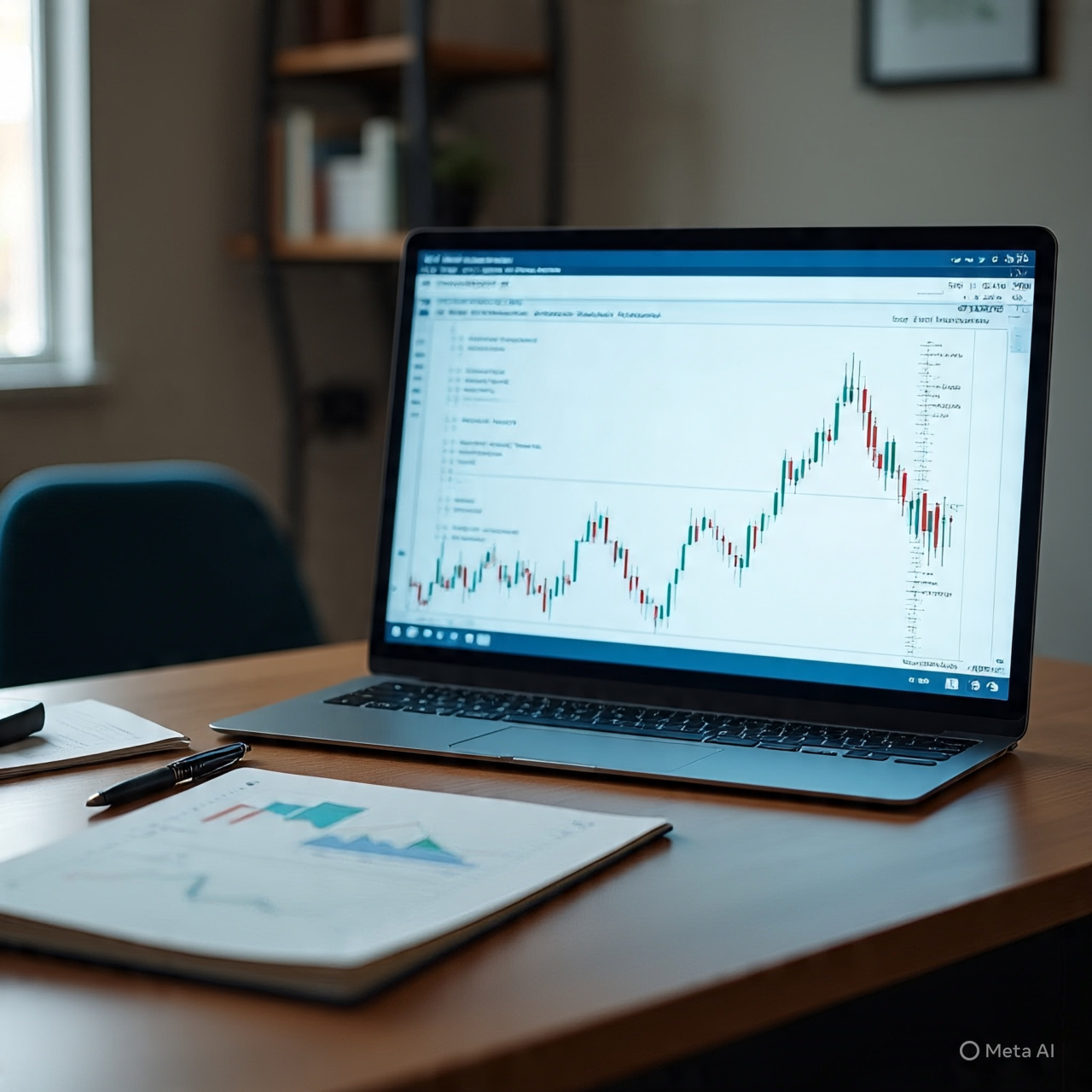
How to Read Forex Charts: A Beginner's Guide
Meta Description:
Learn how to read forex charts with this beginner-friendly guide. Discover types of forex charts, key indicators, and strategies to improve your trading decisions in 2025.
Introduction
Forex trading can seem overwhelming when you first begin, especially when faced with lines, candlesticks, and complex patterns on a chart. But understanding how to read forex charts is one of the most important skills every trader must master. Charts provide critical insights into market movements, trends, and opportunities, helping you make informed trading decisions instead of relying on guesswork.
In this guide, we’ll break down the essentials of forex charts, explain different chart types, and show you step-by-step how to interpret price movements like a professional.
What is a Forex Chart?
A forex chart is a graphical representation of currency price movements over a certain period. Traders use these charts to analyze historical data and predict future price behavior.
Forex charts display:
- Currency pair (e.g., EUR/USD, GBP/JPY)
- Time frame (from 1-minute to monthly charts)
- Price movements (open, close, high, and low values)
Without charts, forex trading would be blind speculation.
Types of Forex Charts
Forex platforms usually provide three main chart types.
Chart Type Description Best For
| Line Chart | Connects closing prices with a simple line. | Beginners, quick overview. |
| Bar Chart | Displays open, close, high, and low for each time frame. | Intermediate traders. |
| Candlestick Chart | Visualizes market sentiment with colored candles showing open, high, low, and close. | Most popular among all traders. |
👉 Candlestick charts are the most widely used because they combine price action and market psychology in an easy-to-read format.
Key Elements of a Forex Chart
Before diving into analysis, let’s understand the basic components of a forex chart:
1. Price Axis (Vertical)
Represents the currency pair’s price levels.
2. Time Axis (Horizontal)
Shows the time frame (minutes, hours, days, weeks, or months).
3. Candlesticks/Bars
- Bullish Candle (Green/White): Price closed higher than it opened.
- Bearish Candle (Red/Black): Price closed lower than it opened.
4. Indicators and Tools
Technical indicators (like Moving Averages, RSI, and Bollinger Bands) can be applied for deeper analysis.
How to Read Candlestick Charts
Candlestick charts are the foundation of forex trading. Each candlestick represents one time period (e.g., 1 hour, 1 day).
- Body: The open and close price.
- Wick/Shadow: The highest and lowest price reached.
- Color: Green (bullish/uptrend) or Red (bearish/downtrend).
Example:
- If EUR/USD opened at 1.1000 and closed at 1.1050 → Bullish candle.
- If it opened at 1.1000 and closed at 1.0950 → Bearish candle.
Understanding Forex Chart Timeframes
Forex charts can be customized to show price data for different timeframes:
Timeframe Usage
| 1-Minute to 15-Minute | Scalping (very short-term trades) |
| 1-Hour to 4-Hour | Day trading |
| Daily | Swing trading |
| Weekly to Monthly | Long-term trend analysis |
👉 New traders should start with daily charts to avoid noise from smaller timeframes.
Basic Chart Patterns Every Beginner Should Know
Recognizing chart patterns helps traders predict potential market direction.
1. Trend Lines
- Uptrend: Higher highs and higher lows.
- Downtrend: Lower highs and lower lows.
2. Support and Resistance
- Support: A price level where the market tends to bounce upward.
- Resistance: A price level where the market tends to reverse downward.
3. Popular Patterns
Pattern Signal
| Head and Shoulders | Possible trend reversal. |
| Double Top/Bottom | Strong reversal pattern. |
| Triangles (Ascending/Descending/Symmetrical) | Continuation or breakout signal. |
Using Indicators to Read Forex Charts
Technical indicators provide additional insights into price movements. Some of the most popular include:
- Moving Averages (MA) – Show overall trend direction.
- Relative Strength Index (RSI) – Measures overbought/oversold conditions.
- MACD (Moving Average Convergence Divergence) – Identifies momentum shifts.
- Bollinger Bands – Highlight volatility and potential breakout zones.
👉 Combine indicators with chart patterns for more accurate trading decisions.
Step-by-Step: How to Read a Forex Chart (Beginner’s Process)
- Select a currency pair (e.g., EUR/USD).
- Choose a timeframe (daily or 4-hour is ideal for beginners).
- Identify the trend (uptrend, downtrend, or sideways).
- Mark support and resistance levels.
- Look for candlestick patterns (e.g., Doji, Hammer, Engulfing).
- Apply 1–2 indicators for confirmation.
- Plan your entry and exit points based on your analysis.
Example Forex Chart Analysis
Let’s say you are analyzing GBP/USD on a daily chart:
- Price is above the 50-day moving average (indicating an uptrend).
- A bullish engulfing pattern forms near support.
- RSI is at 45 (not overbought, not oversold).
👉 This could be a potential buying opportunity, with an entry near support and a target at the next resistance.
Common Mistakes Beginners Make When Reading Forex Charts
- Overloading charts with too many indicators.
- Ignoring higher timeframes.
- Trading against the trend.
- Not using stop-losses.
- Misinterpreting candlestick signals without confirmation.
FAQs About How to Read Forex Charts
Which forex chart type is best for beginners?
Candlestick charts are the most popular and easiest to read because they show price action and market sentiment.
What timeframe should a beginner use?
Daily or 4-hour charts are best for beginners since they filter out noise from smaller timeframes.
How do I know if the market is in an uptrend or downtrend?
Look for higher highs/higher lows (uptrend) or lower highs/lower lows (downtrend). Indicators like Moving Averages can also confirm trends.
Do I need indicators to read forex charts?
Not necessarily. Price action and patterns can be enough, but indicators help confirm signals.
How long does it take to learn chart reading?
With consistent practice, most beginners can understand the basics within a few weeks. Mastery, however, takes time and experience.
Read Next: Scalping vs Swing Trading: Which is Better?
'Business' 카테고리의 다른 글
| Forex Trading Tax in Pakistan – Everything You Should Know (0) | 2025.09.02 |
|---|---|
| What is a Pip in Forex? Simple Explanation (0) | 2025.09.01 |
| Forex Trading Hours in Pakistan Time (0) | 2025.08.20 |
| Scalping vs Swing Trading: Which is Better? (0) | 2025.08.19 |
| Best Forex Trading Apps Pakistan 2025 (2) | 2025.08.16 |